
The commercial decision
What should commercial developers expect from a paving partner?
New development and redevelopment projects compress many surface decisions into the final stages. Utility adjustments, drainage structures, landscape islands, curb, walks, loading zones, fire access, parking counts, accessible routes, signage, and striping can all affect paving sequence.
A complete package defines base and grade responsibility, limits of paving, tie-ins, material sequence, testing or inspection, equipment access, phasing, weather risk, final lift timing, and how the site transitions from construction traffic to public use.
MD Asphalt Company coordinates asphalt and concrete field work with general contractors, developers, civil teams, and property representatives. Current plans, addenda, tenant requirements, municipal comments, logistics, and opening milestones should be part of the bid conversation.
Decision snapshot
What belongs in the first project conversation?
| Decision area | What to establish |
|---|---|
| Critical path | Site readiness, curb and utility completion, paving, markings, inspection, and turnover |
| Key documents | Current civil plans, details, specifications, addenda, alternates, and logistics |
| Opening focus | Safe access, drainage, clean transitions, parking layout, and finished appearance |
| Best handoff | Defined punch process and responsibility from construction surface to operating property |
Scope intelligence
Which project priorities prevent an under-scoped bid?
- 01
Current civil coordination
Use the latest grading, drainage, utility, paving, striping, and detail sheets. Resolve addenda and municipal comments before the field team prices or builds an outdated condition.
- 02
Opening-date sequence
Tie base acceptance, curb and walk completion, asphalt lifts, temporary construction use, final surface, markings, stops, inspections, and turnover to the actual opening milestones.
- 03
Traffic and tenant use
Confirm parking counts, accessible routes, loading, fire lanes, drive-through or service movement, delivery access, refuse routes, and tenant-specific markings before layout is finalized.
- 04
Finish-quality interfaces
Building entries, trench drains, curb returns, landscape islands, utility structures, concrete aprons, sidewalks, and adjacent road connections should meet the pavement cleanly.
- 05
Punch and turnover
Define who identifies damage from later construction traffic, how repairs are authorized, when final striping occurs, and what must be complete for owner or municipal acceptance.
Condition before treatment
Which commercial pavement scope fits each kind of need?
| Scope | Best fit | Decision value |
|---|---|---|
| New parking lot construction | Retail, office, mixed-use, institutional, and commercial development | Coordinates prepared support, asphalt placement, grades, access, and the complete traffic surface. |
| Access roads and tie-ins | Internal circulation, public-road connections, service access, and phased development | Builds transitions that respect elevations, traffic, adjoining work, and opening sequence. |
| Curbs, gutters, pads, and walks | Sites where concrete and asphalt grades must move together | Coordinates rigid surfaces, drainage, pedestrian routes, and pavement interfaces. |
| Milling and redevelopment | Existing sites being renovated, expanded, or reconfigured | Controls removal and tie-in elevations before new surface is placed. |
| Final striping and controls | Stalls, accessible markings, traffic arrows, fire lanes, curbs, and stops | Translates the approved traffic plan into an opening-ready surface. |
From site to handoff
How does the commercial planning process stay useful?
- 01
Align documents and milestones
Review current plans, specifications, addenda, tenant requirements, municipal comments, procurement, site logistics, phasing, and the dates tied to inspection or opening.
- 02
Resolve site readiness
Confirm grades, support, drainage, utilities, curb, walks, entries, access, testing or inspection, and the responsibility for accepting each area before paving.
- 03
Build the surface sequence
Coordinate lifts, construction traffic, final surface timing, tie-ins, concrete interfaces, temporary routing, striping, stops, and weather dependencies.
- 04
Protect the finished work
Define how later trades, deliveries, equipment, landscaping, and punch activity use the new surface and who addresses damage before turnover.
- 05
Close for operations
Complete final markings, cleanup, punch repairs, requested documentation, and the transition from construction logistics to customer and tenant use.
Proof before proposal
What should the decision record contain?
MD Asphalt's first-party planning model reviews condition, drainage and adjoining surfaces, traffic and load, access, phasing, and the finish sequence. That six-part review creates a repeatable way to compare urgent repair, preservation, resurfacing, and replacement without forcing every site into the same recommendation.
This is a decision model, not a remote engineering conclusion. Final recommendations depend on the field condition, project documents, property use, and the information available during the site review.
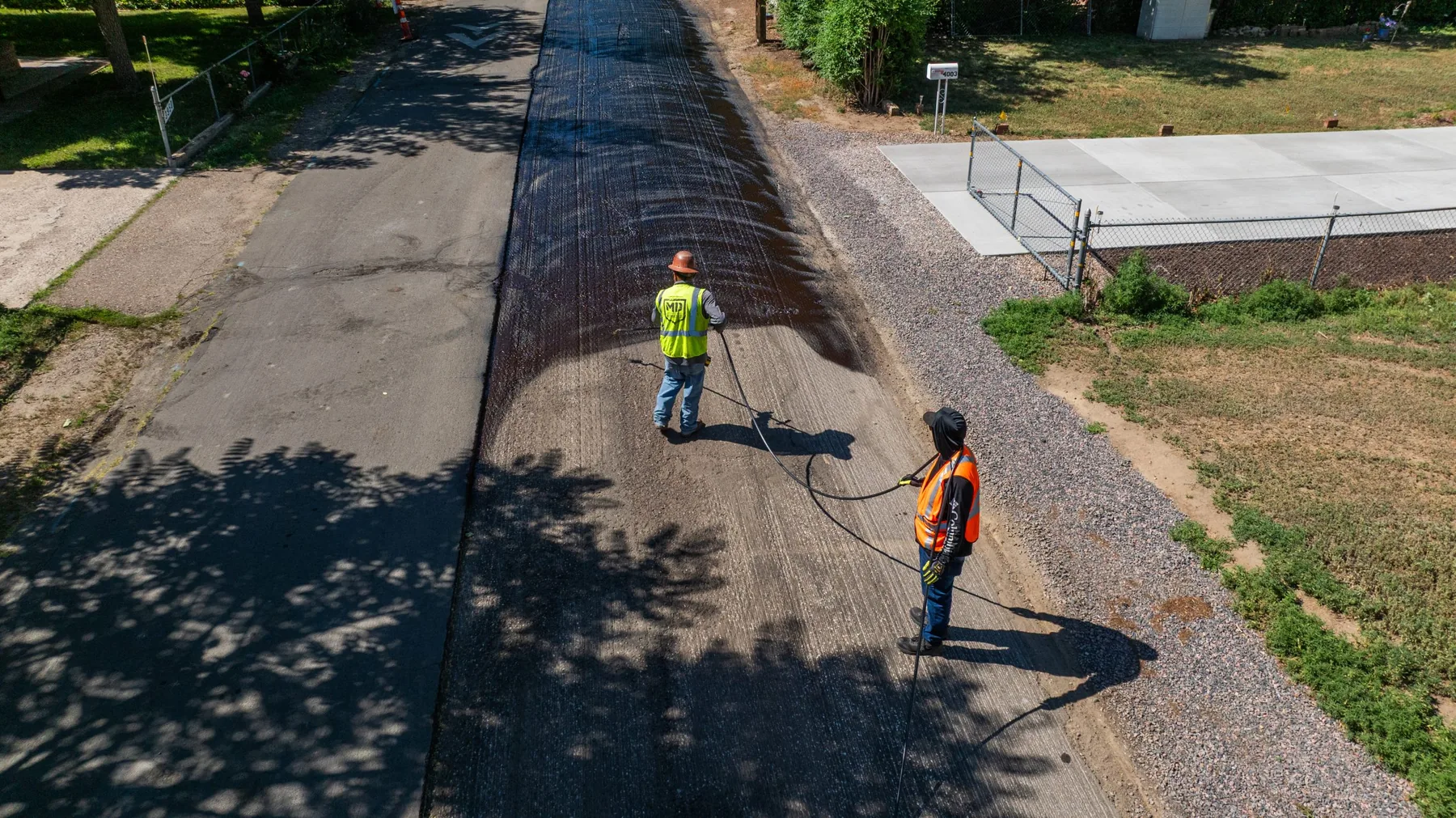
- Commercial project photography showing active crews, paving, concrete, and finished layouts
- Current-plan acknowledgement and clear responsibility boundaries
- Coordination across asphalt, concrete, striping, stops, and final site access
- A sequence tied to inspection, tenant, and opening milestones
- Licensed and insured documentation available for development procurement
Buyer-specific answers
What should commercial developers clarify before requesting a bid?
01When should a developer involve the paving contractor?+
Early enough to review current civil plans, site logistics, quantities, phasing, readiness responsibilities, concrete interfaces, final-lift timing, and opening milestones. Waiting until the surface is expected to start can leave unresolved conditions on the critical path.
02Can paving and concrete site work be coordinated?+
Yes. Identify curbs, gutters, walks, pads, slabs, entries, drainage transitions, and the exact responsibility for grades and preparation. Coordinated sequence is especially useful where finished elevations meet.
03How is final paving protected from construction traffic?+
The project team should define when final surface is placed, which traffic remains afterward, where staging and deliveries occur, how damage is documented, and who authorizes repairs before turnover.
04What documents improve a commercial site paving bid?+
Current civil plans, paving details, specifications, addenda, alternates, quantities, geotechnical or testing requirements, tenant criteria, municipal comments, logistics, schedule, procurement requirements, and the target opening sequence all improve scope clarity.