
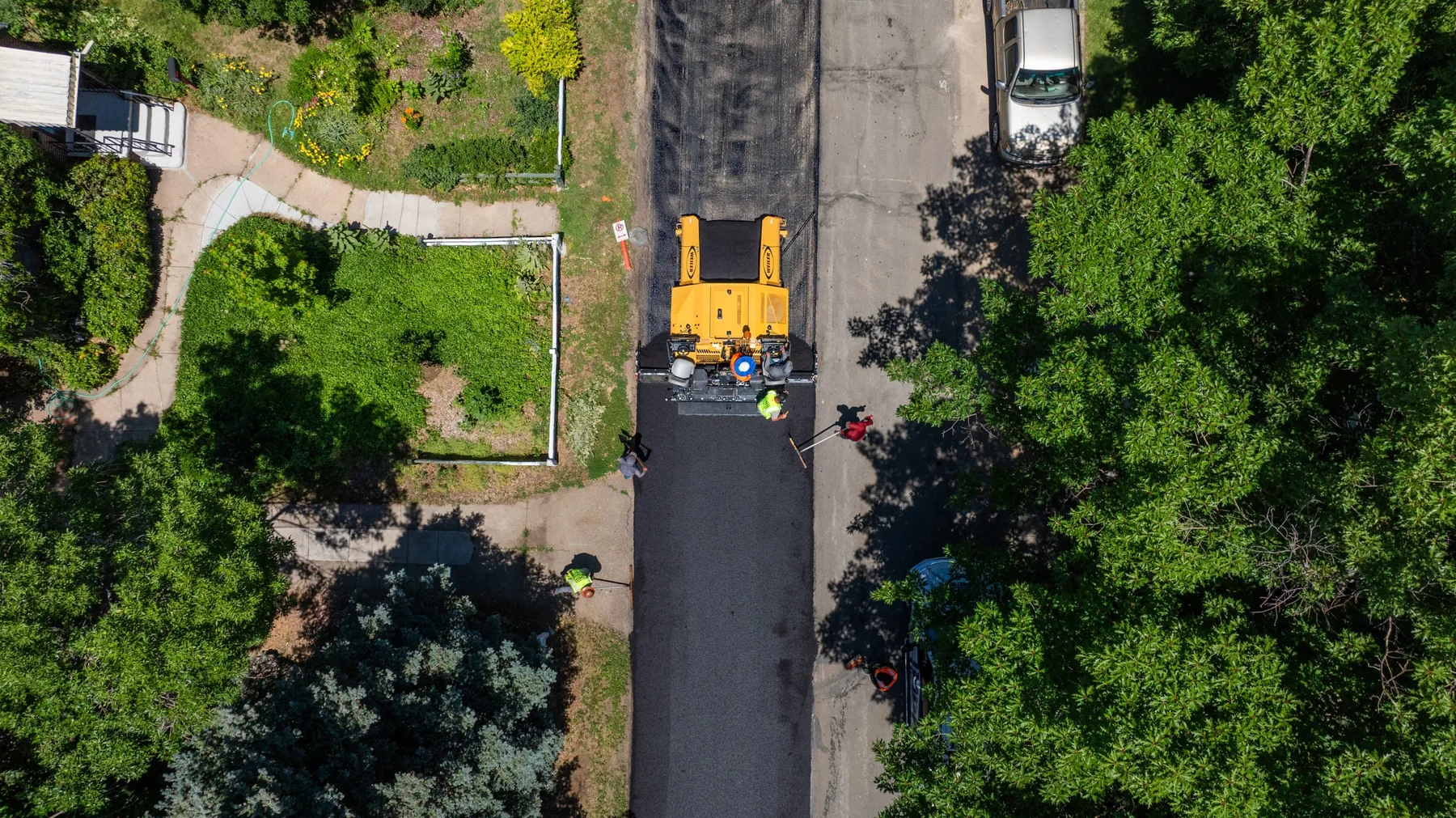
The commercial decision
What should property managers expect from a paving partner?
Portfolio teams rarely manage one pavement decision at a time. A pothole at one site, faded markings at another, and a capital resurfacing request at a third can compete for the same budget. A consistent site-review format makes those decisions easier to rank and defend.
MD Asphalt Company reviews the condition of the paved asset, the way the property operates, and the practical sequence of work. The resulting conversation distinguishes isolated repair, preventive maintenance, mill and overlay, and full reconstruction instead of treating every dark surface as the same problem.
For occupied properties, the operating plan matters as much as the paving method. Tenant entrances, delivery windows, fire lanes, refuse access, vendor traffic, cure windows, and final striping all affect how the work should be phased.
Decision snapshot
What belongs in the first project conversation?
| Decision area | What to establish |
|---|---|
| Best starting point | A documented site walk with photos, priorities, and operating constraints |
| Budget structure | Immediate repair, near-term preservation, and future capital work |
| Access focus | Tenant routes, deliveries, fire access, refuse service, and reopening |
| Useful handoff | A clear scope ownership can compare and the site team can operate |
Scope intelligence
Which project priorities prevent an under-scoped bid?
- 01
Portfolio consistency
Use the same condition language and decision categories across properties so ownership can compare risk, urgency, and capital need without translating a different proposal format every time.
- 02
Tenant and vendor access
Identify entrances, delivery zones, loading areas, refuse routes, fire lanes, and peak traffic before work is scheduled. Those constraints should influence phasing and reopening expectations.
- 03
Proposal comparability
Separate demolition, base correction, asphalt placement, concrete, striping, traffic control, and cleanup. A lower total is not comparable if it leaves out work another proposal includes.
- 04
Lifecycle planning
Treat crack sealing, targeted repair, sealcoat, resurfacing, and replacement as different tools. Surface treatment belongs on suitable pavement, not on structural failure that needs correction.
- 05
Communication ownership
Confirm who approves changes, who receives daily updates, and who communicates closures to tenants. The contractor and property team should not discover that chain after mobilization.
Condition before treatment
Which commercial pavement scope fits each kind of need?
| Scope | Best fit | Decision value |
|---|---|---|
| Mill and overlay | Worn parking lots with a serviceable base | Restores the wearing surface while preserving suitable underlying structure and managing tie-ins at curbs, drains, and entrances. |
| Full-depth repair | Potholes, alligator cracking, utility cuts, and isolated base failure | Corrects failed sections before damage spreads or before a larger resurfacing scope is placed over them. |
| Preventive maintenance | Sound pavement that needs water control and surface protection | Coordinates crack sealing, selective repair, sealcoat, and striping on a condition-based schedule. |
| Striping and traffic markings | New, resurfaced, sealcoated, or reconfigured lots | Restores stalls, directional markings, fire-lane visibility, curbs, and an organized reopening plan. |
| Concrete site work | Broken walks, curbs, gutters, pads, and asphalt transitions | Coordinates elevations and sequencing so concrete and asphalt scopes do not work against each other. |
From site to handoff
How does the commercial planning process stay useful?
- 01
Collect the operating facts
Share the address, ownership objective, tenant mix, known problem areas, budget timing, vendor rules, and the days or hours the site cannot lose access.
- 02
Walk and classify the pavement
Review failures, drainage, traffic zones, edges, concrete transitions, markings, and previous repairs. Separate structural problems from surface wear.
- 03
Build a decision-ready scope
Organize work by urgency and method, state assumptions and exclusions, and identify phases that keep the property functioning.
- 04
Coordinate the occupied site
Confirm notices, closure zones, access routes, material and weather dependencies, striping sequence, and reopening expectations before mobilization.
- 05
Carry the plan forward
After the project, preserve the condition record and identify the next maintenance or capital checkpoint so the site does not return to emergency-only decisions.
Proof before proposal
What should the decision record contain?
MD Asphalt's first-party planning model reviews condition, drainage and adjoining surfaces, traffic and load, access, phasing, and the finish sequence. That six-part review creates a repeatable way to compare urgent repair, preservation, resurfacing, and replacement without forcing every site into the same recommendation.
This is a decision model, not a remote engineering conclusion. Final recommendations depend on the field condition, project documents, property use, and the information available during the site review.
- Commercial parking lot, roadway, and active-site project photography
- Clear scope boundaries for asphalt, concrete, striping, traffic control, and cleanup
- Licensed and insured documentation available for procurement review
- A named point of contact from site assessment through project coordination
- Phasing and reopening assumptions written into the project conversation
Buyer-specific answers
What should property managers clarify before requesting a bid?
01Can you help prioritize work across several properties?+
Yes. Start with the addresses, known concerns, photos, ownership priorities, and budget calendar. Each property still needs its own condition review, but using consistent categories makes portfolio decisions easier to compare.
02Can paving be phased around tenants and deliveries?+
Often, yes. The workable phase plan depends on entrances, circulation, fire access, loading, material placement, cure windows, and the final striping sequence. Those operating constraints should be discussed before the scope is finalized.
03Do you offer recurring pavement maintenance planning?+
Yes. Maintenance planning can combine inspection, crack sealing, selective repair, sealcoat, striping, and future resurfacing priorities. Treatments are recommended according to condition rather than placed on a fixed calendar without inspection.
04What should we send before a site assessment?+
Send the address, property type, approximate paved areas, photos of visible failures, known drainage or access issues, budget or board dates, procurement requirements, and the operating windows the property must protect.