
The commercial decision
What should schools and districts expect from a paving partner?
School facilities compress heavy traffic into predictable peaks. Morning arrival, afternoon dismissal, buses, parent queues, staff parking, athletics, food service, maintenance, and community events create distinct movement patterns across the same site.
A useful campus assessment maps those patterns alongside potholes, cracking, ponding, worn markings, curb and walk conditions, utility cuts, drainage, snow storage, and the areas students cross on foot.
MD Asphalt Company coordinates paving, milling, repair, maintenance, concrete, striping, and stops. Work can be discussed around summer, break, weekend, or phased windows, but the realistic schedule depends on area size, preparation, weather, cure requirements, markings, and campus access.
Decision snapshot
What belongs in the first project conversation?
| Decision area | What to establish |
|---|---|
| Campus map | Buses, parents, staff, students, deliveries, athletics, emergencies, and events |
| Calendar map | Summer work, breaks, weekends, activities, food service, and facility access |
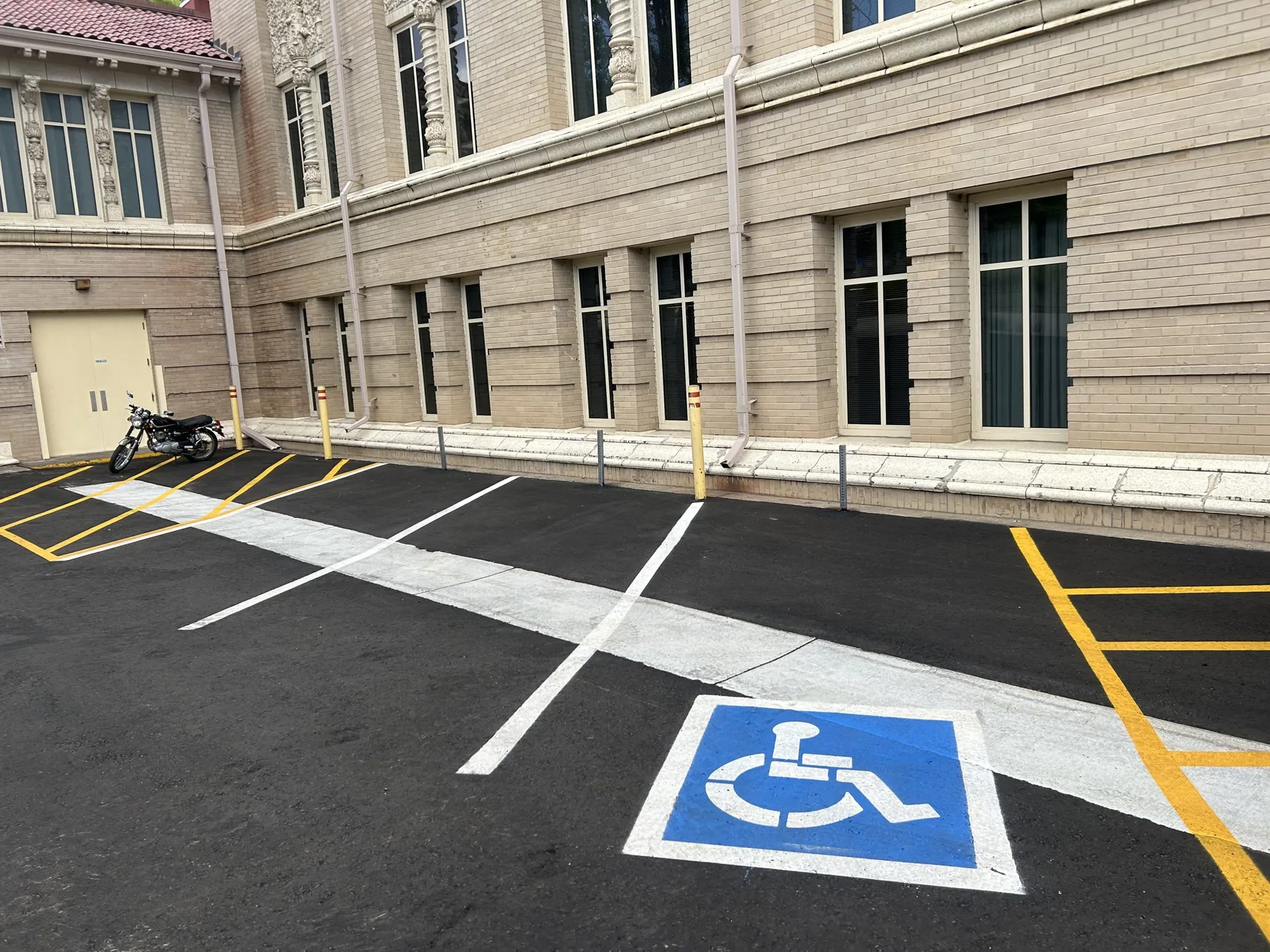
| Safety finish | Visible circulation, crosswalks, fire lanes, accessible routes, curbs, and stops |
| Budget plan | Urgent repairs, phased preservation, and future lot or roadway capital work |
Scope intelligence
Which project priorities prevent an under-scoped bid?
- 01
Arrival and dismissal flow
Document bus loops, parent queues, drop-off and pickup lanes, staff entry, pedestrian crossings, and the locations where movements overlap during peak periods.
- 02
Calendar constraints
Identify summer programs, athletics, food service, construction, maintenance, community use, deliveries, and emergency operations that continue when classes are not in session.
- 03
Pedestrian and accessible routes
Review walks, curb transitions, crosswalks, accessible stalls and paths, entrances, loading zones, and damaged edges where paved and concrete surfaces meet.
- 04
Bus and service loads
Evaluate turning, braking, concentrated traffic, service drives, refuse routes, delivery zones, and water-prone areas separately from ordinary staff parking.
- 05
Phased capital planning
Separate immediate safety and access repairs from preservation and future resurfacing so facilities teams can align pavement work with annual budgets and campus projects.
Condition before treatment
Which commercial pavement scope fits each kind of need?
| Scope | Best fit | Decision value |
|---|---|---|
| School lot and roadway paving | Staff lots, visitor areas, bus loops, access roads, and campus circulation | Builds or renews traffic surfaces with user movement, drainage, and closure windows considered. |
| Bus-loop and failure repair | Potholes, settlement, turning-zone distress, utility cuts, and edge failure | Targets localized structural problems before they spread or disrupt campus traffic. |
| Milling and resurfacing | Worn surfaces where grades, drains, curbs, and entrances must remain controlled | Removes a selected depth before a new wearing surface is placed. |
| Campus concrete work | Walks, curbs, gutters, pads, and asphalt transitions | Coordinates pedestrian and drainage surfaces with the paving sequence. |
| School traffic markings | Bus lanes, parent queues, crosswalks, fire lanes, stalls, arrows, and stencils | Makes the operating plan visible when the campus reopens. |
From site to handoff
How does the commercial planning process stay useful?
- 01
Map users and calendar
Document bus, parent, staff, student, delivery, athletic, event, maintenance, and emergency movement alongside every date or facility that cannot be interrupted.
- 02
Review condition by campus zone
Separate structural failure, drainage, concrete transitions, worn markings, surface wear, and high-load areas instead of assigning one treatment to the whole campus.
- 03
Build the closure sequence
Coordinate phases, alternate parking or routing, work hours, weather, cure windows, striping, inspections, and reopening with the facility team.
- 04
Communicate the field plan
Confirm the district contact, site contact, daily questions, construction notices, emergency access, delivery changes, and how schedule updates reach campus users.
- 05
Reopen an organized campus
Complete markings, stops, cleanup, access guidance, requested documentation, and future maintenance notes before normal traffic returns.
Proof before proposal
What should the decision record contain?
MD Asphalt's first-party planning model reviews condition, drainage and adjoining surfaces, traffic and load, access, phasing, and the finish sequence. That six-part review creates a repeatable way to compare urgent repair, preservation, resurfacing, and replacement without forcing every site into the same recommendation.
This is a decision model, not a remote engineering conclusion. Final recommendations depend on the field condition, project documents, property use, and the information available during the site review.
- A campus-specific traffic and closure plan, not only a paving sequence
- School, institutional, municipal, or active-site project photography
- Clear coordination of asphalt, concrete, markings, stops, and reopening
- Schedule assumptions tied to real campus use and calendar windows
- Licensed and insured documentation available for district procurement
Buyer-specific answers
What should schools and districts clarify before requesting a bid?
01Can school paving be completed during summer break?+
Some projects can be scheduled in summer, but the realistic window depends on size, preparation, repairs, concrete, weather, cure requirements, striping, inspections, athletics, programs, deliveries, and other campus construction. Share the full calendar during planning.
02Can bus loops and parent lanes be evaluated separately?+
Yes. Vehicle type, turning, braking, traffic concentration, drainage, base condition, and access differ from staff or visitor parking. The assessment should classify these zones separately.
03Do you coordinate striping and traffic markings after paving?+
Yes. Provide approved layouts or district requirements for stalls, arrows, crosswalks, bus lanes, fire lanes, accessible markings, curbs, and stencils. The striping sequence should be included in reopening planning.
04What should a school district send with a bid request?+
Send site plans, marked limits, specifications, bid forms, procurement and insurance requirements, campus calendars, traffic patterns, known drainage or utility issues, work-hour limits, inspection requirements, and the date normal operations resume.